
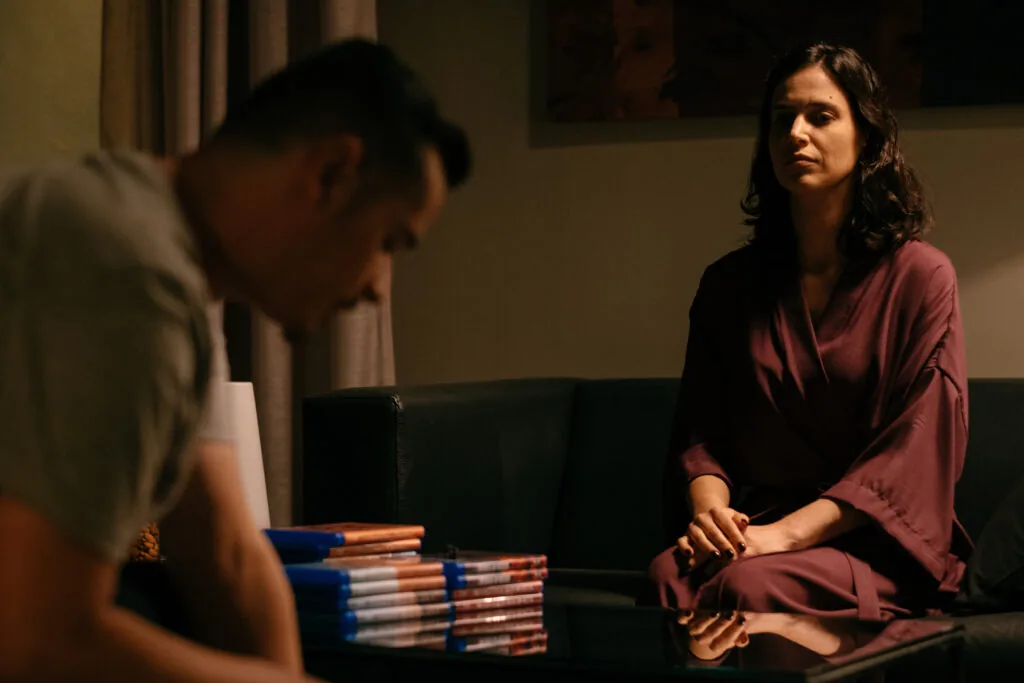
Ingrid Savoy, a celebrity on the cusp of a reality show, spends her days confined to a hotel room. Between premonitory visions, a paparazzi attack and anarchist attacks that break out across the city, the artist lives the constant imminence of a scandal. Through a flow of thoughts in which the characters mix their own reflections with random quotes, the film explores a state of alienation and madness that is fed by a media machine.

Despite the experimental approach, the work focuses on a tradition of staging and speaking. A dramatic heritage that draws from the essential device of the scene and, consequently from its subversion, its cinematographic possibilities. The film reconciles a drama of classical procedures (dialogue as the essential driving force of the story) with a fantastic approach and inventive visual exploration.
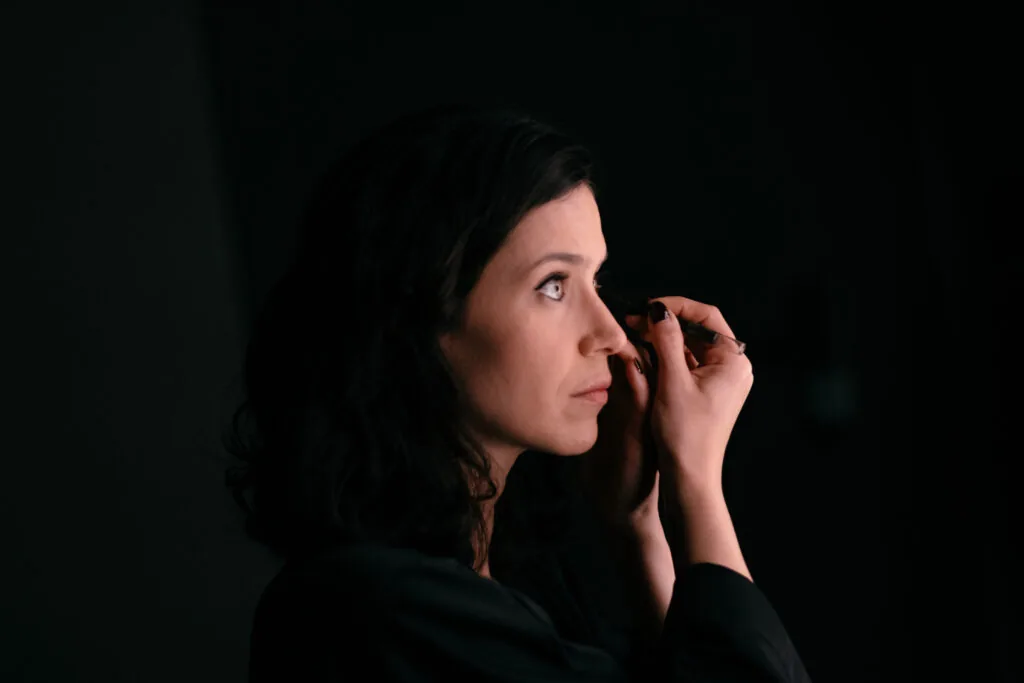

Despite the experimental approach, the work focuses on a tradition of staging and speaking. A dramatic heritage that draws from the essential device of the scene and, consequently from its subversion, its cinematographic possibilities. The film reconciles a drama of classical procedures (dialogue as the essential driving force of the story) with a fantastic approach and inventive visual exploration.
The main characteristic of the film, in this sense, is its anti-naturalist tone. We’re not looking for a realism in the dynamics of the scene, but an irreverent game, an induct intonation that shows ambiguity. We are between the pathetic and the solemn, melodrama and humor. The characters truly believe in what they say, but there’s a logic of absurd that integrates all their environments.
From this dubious tone, the film glimpses a series of reflections ranging from the logic of entertainment in the contemporary world to the relation between spectator and product. Evidencing, as said before, a mechanism of consumption that starts from the adoration of a personality. We love not only people, but their images, their “imagery entities” that are elaborated by the media apparatus. — Arthur Tuoto